Yielding to the Year: What Europe's Seasonal Rhythms Can Teach Americans About Living in Time
There is a particular kind of exhaustion that has no name in the American vocabulary — the weariness that accumulates not from overwork alone, but from the refusal to stop. It is the fatigue of a culture that treats February with the same energetic expectations as June, that schedules productivity meetings in the deep of winter as confidently as it does in the long light of summer. It is, in essence, the cost of pretending that time is flat.
In much of continental Europe, this pretense would be considered not merely unwise but faintly absurd. From the candlelit introspection of a Scandinavian December to the sun-drenched, unhurried expansiveness of a Mediterranean August, European cultures have long organized their inner lives — and their outer ones — around the understanding that the year is not a straight line but a circle. Each season carries its own emotional temperature, its own invitation, its own form of intelligence. To resist these shifts is not productivity; it is a kind of spiritual stubbornness.
The Wisdom Written in the Wheel of the Year
Long before wellness became an industry, European agricultural and spiritual traditions encoded seasonal attunement into the fabric of daily life. The Christian liturgical calendar, the pre-Christian festival cycle, the rhythms of the harvest — all reinforced the same essential message: human beings are not separate from the natural world but embedded within it, subject to its fluctuations and enriched by its variations.
This is not mere romanticism. Research in chronobiology confirms what European tradition has long intuited: human hormonal patterns, sleep architecture, immune function, and even cognitive style shift meaningfully across the seasons. Serotonin production rises and falls with light exposure. Melatonin levels reshape our relationship to sleep and wakefulness. The body, in other words, already knows what the culture refuses to acknowledge — that winter and summer are fundamentally different states of being, each deserving a different quality of attention.
In Germany, the concept of Gemütlichkeit — that warm, convivial coziness that defines the interior life of winter months — is not simply a design aesthetic. It is a psychological posture, a deliberate turning inward that honors the season's invitation to slow down, gather close, and reflect. In France, the August exodus known as les vacances is not a luxury but an institutional acknowledgment that summer's fullness demands genuine rest, not merely a change of scenery with a laptop in tow.
Spring as Spiritual Practice
Perhaps nowhere is the European relationship with seasonal transition more instructive than in the way spring is received. Across the continent, the return of warmth and light is treated as a genuine event — something to be marked, celebrated, and inhabited rather than simply noted on a weather app.
In the Netherlands, the blooming of tulip fields draws millions not merely as a tourist spectacle but as a cultural ritual of renewal. In Austria and Switzerland, the tradition of Alpaufzug — the ceremonial driving of cattle to high mountain pastures — transforms what might be a logistical agricultural task into a community celebration of the season's opening. These are not quaint anachronisms. They are technologies of attention, practices that force the participant to fully register that something important has changed.
For Americans accustomed to treating spring as simply the period before summer — a brief warm-up before the real productivity season begins — this receptive posture toward seasonal transition can feel almost foreign. Yet the psychological benefits of marking such transitions are well documented. Ritual acknowledgment of change reduces anxiety, strengthens social bonds, and provides the nervous system with a sense of meaningful structure. The European spring is not merely warmer weather; it is a permission slip for renewal.
The Undervalued Gift of Winter's Darkness
If spring offers renewal, winter offers something rarer and, in the American context, considerably more controversial: permission to contract. To do less. To turn the gaze inward rather than outward. To allow the pace of life to genuinely decelerate rather than simply relocating the same frenetic energy to a colder setting.
In Finland and Denmark, the long, dark winter is not endured so much as inhabited. The Danish practice of hygge — widely discussed in American wellness circles, though frequently misunderstood as mere candle-buying — is at its core a philosophy of deliberate interiority. It is the art of making the small space of winter rich enough that the absence of light and warmth does not register as deprivation but as a different kind of fullness.
This reframing has significant implications for American wellness culture, which tends to treat the winter productivity dip as a problem to be solved — with light therapy boxes, motivational content, and aggressive goal-setting — rather than a signal to be respected. The European tradition suggests a different question: what if the diminishment of winter energy is not a malfunction but a message? What if the appropriate response is not to override the season but to honor it?
Autumn and the Practice of Beautiful Endings
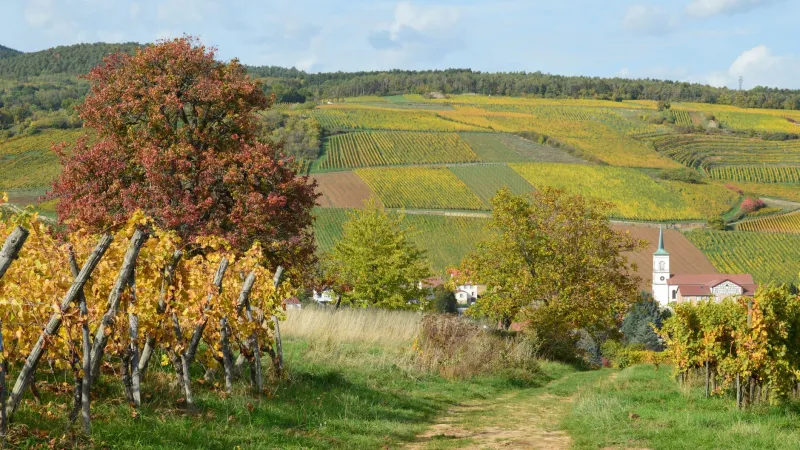
Between summer's expansiveness and winter's stillness lies autumn — perhaps the most emotionally complex of the European seasonal transitions, and the one most richly laden with philosophical implication. In Italy, the harvest season carries a gravitas that transcends agriculture. The vendemmia, the grape harvest, is simultaneously a celebration of abundance and an acknowledgment of ending — a moment when the year's fullness is gathered precisely because it cannot last.
This capacity to find beauty in conclusion, to honor the ending of something rather than rushing past it toward the next beginning, represents a form of emotional maturity that American culture rarely cultivates. The instinct to optimize — to immediately pivot from summer to holiday planning, from vacation to back-to-school preparation — forecloses the reflective pause that autumn, in the European tradition, is specifically designed to provide.
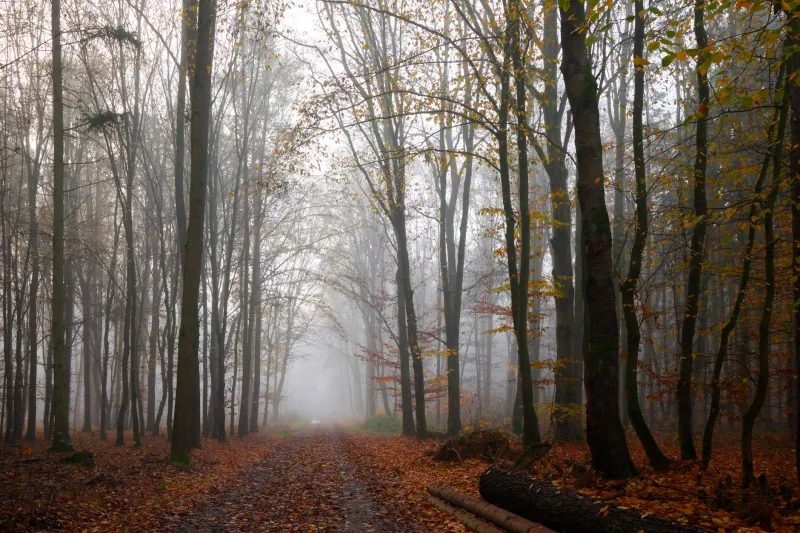
To sit with autumn, to allow its particular quality of golden, melancholy light to register fully, is to practice a form of acceptance that has direct implications for how we navigate loss, transition, and change in every domain of life. The season teaches, if we allow it to, that endings are not failures. They are completions.
Returning to the Circle
The deeper lesson of the European seasonal tradition is not that Americans should adopt specific rituals — though many are genuinely worth exploring. It is that the fundamental relationship between human beings and time can be reimagined. Time need not be a resource to be optimized, a commodity to be maximized, a straight line racing toward an ever-receding horizon of achievement.
It can, instead, be a circle — one that returns, reliably, to the same points of renewal, contraction, abundance, and release. To live within that circle consciously is not to abandon ambition or productivity. It is to locate those drives within a larger, more generous framework — one that acknowledges the body's wisdom, honors the earth's rhythms, and understands that the capacity to rest is not the enemy of the capacity to flourish, but its very foundation.
Stilhed, at its heart, is an invitation into exactly this kind of attentiveness. Not the stillness of inertia, but the stillness of a life lived in genuine relationship with the rhythms that surround and sustain it. The European year, in all its seasonal richness, offers Americans a map toward that deeper quiet — not by escaping time, but by finally learning to inhabit it.