Where the Trees Hold Silence: How Europe's Ancient Woodlands Are Calling American Minds Back to Rest
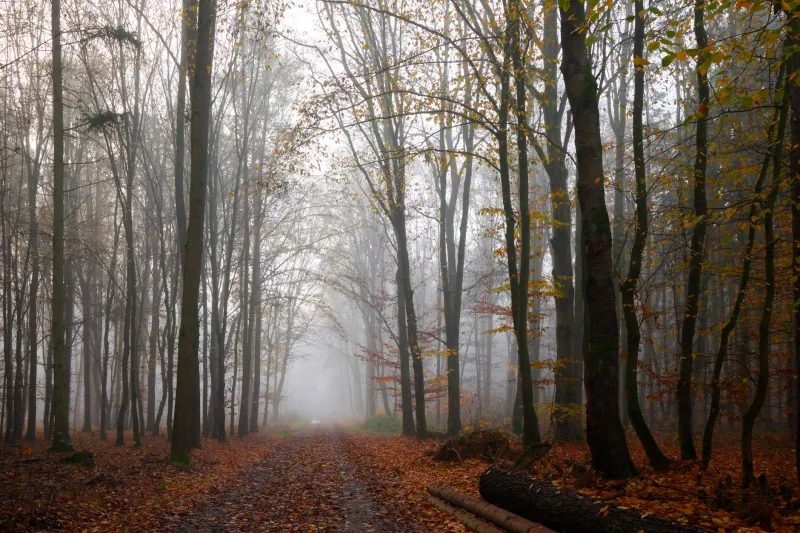
There is a particular quality of quiet that exists only beneath a canopy of old trees. It is not the absence of sound—birds call, wind moves through leaves, branches settle—but rather the absence of urgency. In Europe's most ancient forests, this quality has been understood for centuries. Today, it is drawing a new kind of pilgrim: the exhausted American professional, phone in pocket, searching for a stillness that no productivity tool has yet been able to manufacture.
The practice known as Shinrin-yoku, or forest bathing, originated in Japan in the 1980s as a formal public health initiative. Yet the underlying philosophy—that sustained, unhurried immersion in woodland environments repairs the nervous system and quiets the restless mind—resonates deeply with European traditions that predate the term by generations. Germans have long prescribed walks through the Schwarzwald as restorative medicine. Scandinavian cultures built entire social philosophies around time spent beneath the forest's shelter. And in the borderlands of Poland and Belarus, the Białowieża Forest—one of the last primeval woodlands on the continent—has been treated as something approaching sacred ground for as long as people have lived beside it.
For Americans accustomed to measuring wellness in metrics, the invitation these forests extend is quietly radical: to do less, notice more, and allow the body to arrive at a pace the mind cannot schedule.
The Science of Canopy and Calm
Researchers have spent the past two decades attempting to quantify what walkers in European forests have long known intuitively. Studies conducted across Germany, Finland, and the Netherlands consistently demonstrate that time spent in dense woodland environments reduces cortisol levels, lowers blood pressure, and measurably improves mood—outcomes that exceed those produced by equivalent time spent in urban parks or indoor exercise facilities.
Part of the explanation lies in phytoncides, the volatile organic compounds that trees release as a natural defense mechanism. When humans breathe these compounds, studies suggest, the body responds by increasing the activity of natural killer cells—components of the immune system associated with reduced inflammation and greater resilience to illness. Ancient European forests, with their extraordinary biodiversity and centuries of undisturbed growth, release these compounds in concentrations that younger, more managed woodlands simply cannot match.
Beyond biochemistry, there is something less easily measured at work. The German philosopher Friedrich Schiller wrote of the Erhabene—the sublime—as an experience that temporarily overwhelms the self, producing a kind of liberating surrender. Standing beneath a 500-year-old oak in the Białowieża, or following a fog-threaded path through the Black Forest at dawn, produces precisely this effect. The individual, with all of their notifications and obligations, becomes briefly, mercifully small.
Germany's Schwarzwald: A Forest That Prescribes Itself
The Black Forest of southwestern Germany has been a destination for restorative travel since the nineteenth century, when sanatoriums and Kurhäuser—cure houses—drew visitors from across Europe seeking relief from the pressures of industrializing life. The landscape itself seems designed for contemplative wandering: dense stands of silver fir and Norway spruce alternate with meadow clearings, cold streams, and the occasional half-timbered village where time appears to have reached a gentler agreement with itself.
Modern visitors to the region will find formal Waldtherapie programs offered through several spa resorts and wellness centers, particularly around Baden-Baden. These programs are not merely guided hikes. They incorporate extended periods of seated stillness, breathing exercises calibrated to the forest's ambient rhythm, and deliberate sensory attention—touching bark, listening to the specific acoustics of a particular clearing, noting the way light changes as the canopy thickens or opens. For American travelers accustomed to experiences that deliver constant stimulation, the instruction to simply sit and observe for thirty uninterrupted minutes can feel, at first, almost confrontational. Most report that this discomfort dissolves within a quarter of an hour.
Poland's Białowieża: Stillness at the Edge of the Primeval
If the Schwarzwald represents the curated European forest experience—refined, accessible, gently therapeutic—then Białowieża offers something rawer and more ancient. Straddling the border between Poland and Belarus, this UNESCO World Heritage site is among the last remaining fragments of the vast primeval forest that once covered lowland Europe. European bison move through its undergrowth. Centuries-old oaks stand alongside fallen giants slowly returning to soil. The forest does not perform wellness; it simply persists, indifferent and immense.
Guided immersion walks are available through the Polish side of the park, led by naturalists and increasingly by practitioners trained in forest therapy. The pace is deliberately unhurried—two kilometers may occupy an entire morning. Participants are encouraged to leave headphones and cameras in their accommodations, an instruction that initially produces visible anxiety in many visitors and, by the afternoon, something approaching gratitude.
The stillness of Białowieża is not peaceful in any domesticated sense. It is vast and faintly demanding, the kind of quiet that asks something of the person who enters it. American visitors frequently describe the experience as disorienting before it becomes clarifying—a recalibration of attention that persists, they report, for weeks after returning home.
Bringing the Forest Home: Urban Practices for American Readers
Not every wellness seeker has the means or the schedule to book a flight to central Europe. The good news is that the principles underlying forest bathing do not require ancient trees to produce meaningful results, though older and denser woodlands do amplify the effect.
For those in American cities, the following practices offer a genuine, if partial, approximation of the European woodland experience:
Commit to duration, not distance. The restorative effects of forest immersion depend less on how far one walks than on how long one remains present in a natural setting. A ninety-minute visit to a city park, conducted without a phone and without a destination, will yield measurably different results than a brisk thirty-minute loop.
Engage the senses deliberately. Forest bathing is, at its core, a sensory practice. Before entering any green space, set an intention to notice five specific things using senses other than sight—the texture of a particular tree, the temperature differential between sun and shade, the layered sounds of birds and wind and distant traffic gradually receding in the mind's foreground.
Seek the oldest trees available. Urban parks in cities like Portland, Boston, Philadelphia, and Washington, D.C., contain individual specimens of considerable age. Spending time near these trees—touching their bark, sitting beneath their canopy—connects the body to a slower timescale and, research suggests, produces a measurable calming effect.
Practice the European discipline of purposelessness. Perhaps the most culturally challenging element of forest bathing for American practitioners is the deliberate abandonment of goals. European forest therapy programs consistently emphasize that the walk must have no destination, no fitness objective, no content to be later shared. This purposelessness is not laziness; it is the practice itself.
The Invitation of the Old Growth
There is a reason that the word stilhed—the Danish and Norwegian term for stillness, for quietude, for the particular peace that arises when the noise of living briefly subsides—finds its most natural expression in the language of cultures that have long lived alongside ancient forests. Stillness is not the absence of life. It is, in the European woodland tradition, life at its most concentrated and most patient.
For Americans navigating the relentless acceleration of contemporary existence, these forests—whether encountered in person along a fog-wrapped path in Baden-Württemberg or approximated in a morning spent beneath the oldest oak in a neighborhood park—offer the same fundamental gift: the reminder that restoration does not require effort. It requires only arrival, attention, and the willingness to remain.