Sacred Emptiness: What European Monasteries Know About the Forgotten Gift of Boredom
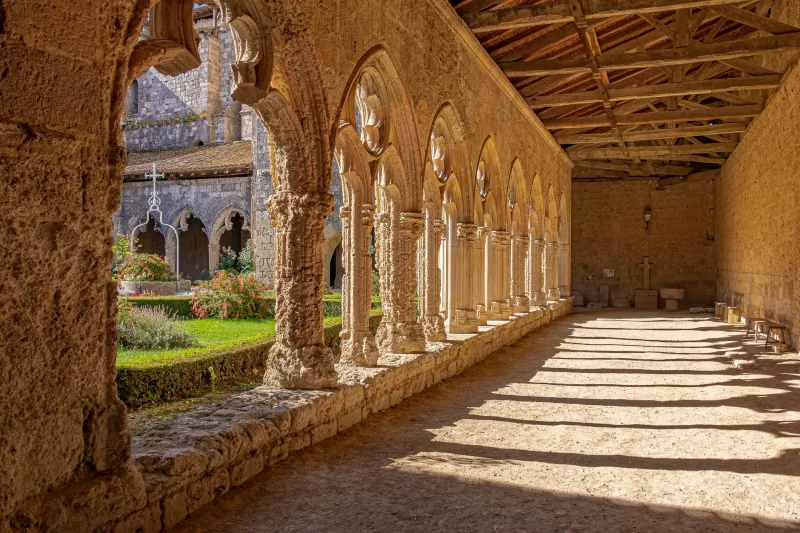
There is a particular quality of silence inside the cloister of the Benedictine Abbey of Montserrat, carved into the mountain rock above the Catalan plains of Spain. It is not the silence of absence. It is something denser, more deliberate — a silence that has been cultivated over centuries, tended like a garden, protected like a flame. Visitors who wander into its arched walkways often report an unexpected discomfort: without a screen to consult, a notification to answer, or a task to complete, they are left alone with themselves. For most Americans, that sensation is not peace. It is panic.
And yet, the monks who inhabit such places consider this discomfort not a malfunction but a beginning.
Boredom as a Spiritual Threshold
The Western monastic tradition, stretching from the desert fathers of fourth-century Egypt to the great abbeys of France, Germany, Ireland, and Italy, has always made space for what might generously be called holy idleness. This is not laziness. It is not the vacant scrolling that Americans have come to associate with downtime. It is, rather, a structured permission to exist without producing — a radical act in any era, but especially in ours.
The Rule of Saint Benedict, written in the sixth century and still governing the daily rhythms of Benedictine communities across Europe, prescribes hours not only for prayer and labor but for lectio divina — a slow, contemplative reading that is less about acquiring information and more about dwelling within language until it opens inward. Between these hours lie quieter stretches of time that are neither fully scheduled nor entirely free. Monks call this liminal space otium sanctum, or sacred leisure. It is the fertile ground from which genuine thought, creativity, and spiritual insight are said to emerge.
Brother Thomas, a lay associate at a Cistercian monastery in the Burgundy region of France, describes it plainly: "We do not fear emptiness here. We have learned to sit inside it until it becomes a room."
What the American Mind Does with Silence
For most Americans, boredom has been rebranded as a medical condition. We carry portable entertainment in our pockets. We fill every commute, every waiting room, every quiet morning with podcasts, playlists, and push notifications. The average American adult now checks their phone over ninety times per day, according to research from Asurion. The cultural message is consistent and unrelenting: an unoccupied mind is a wasted mind.
But neuroscience is beginning to suggest something that European monastics have understood intuitively for over a millennium. When the brain is allowed to wander without a goal — when it is, in the clinical sense, bored — it activates what researchers call the default mode network, a constellation of brain regions associated with creativity, self-reflection, empathy, and the processing of complex emotions. Far from being a void, boredom is, neurologically speaking, an incubation chamber.
Dr. Sandi Mann, a psychologist at the University of Central Lancashire who has studied boredom extensively, argues that allowing the mind to drift is essential to imaginative thinking. "Boredom," she writes, "is the gateway to mind-wandering, which helps our brains create those new connections that can solve problems we've been wrestling with."
The monks of Europe arrived at this conclusion without brain scans. They arrived at it through centuries of lived experience within stone walls.
The Architecture of Stillness
What makes the monastic approach to idleness distinct from simply staring at the ceiling is its architecture — the deliberate structures that hold emptiness in place. The cloister itself is one such structure: a covered walkway enclosing an open garden, designed to facilitate unhurried movement that is neither work nor rest. Walking the cloister is purposeless in the best possible sense. There is nowhere to arrive.
The canonical hours — those regular calls to prayer that punctuate the monastic day from Lauds at dawn to Compline at dusk — serve a similar function. They impose a rhythm that liberates the monk from the tyranny of self-directed time. When the bell rings, you stop. When it rings again, you begin. Between those moments, you are simply present.
This rhythmic container is something the American wellness industry has attempted to approximate through meditation apps and digital detox retreats, with varying success. But there is a crucial difference between a ten-minute guided breathing session and the centuries-deep architecture of a Trappist monastery in the Loire Valley. One is a product. The other is a civilization.
Reclaiming Emptiness in an American Life
None of this requires a pilgrimage to Assisi or a week in a German Benedictine guesthouse — though both experiences are, by all accounts, profoundly disorienting in the most useful way. The monastic insight about boredom can be translated into the rhythms of an ordinary American life, provided one is willing to resist the cultural pressure to fill every available moment.
Consider, first, the practice of unscheduled time — not free time colonized by errands or entertainment, but a genuine appointment with emptiness. Fifteen minutes in a quiet room without a phone, a book, or a task. The discomfort that arises in those first few minutes is precisely the threshold the monks speak of. Crossing it, rather than retreating from it, is the practice.
Consider, second, the value of repetitive, purposeless movement — a slow walk around the block without earbuds, a few minutes of sitting by a window, the deliberate act of watching light move across a wall. These are not meditations in the formal sense. They are simply permissions: permission to be unproductive, unentertainable, and briefly, beautifully useless.
Consider, finally, the radical act of tolerating boredom in others — allowing children to sit without screens, resisting the impulse to fill a dinner table silence with a phone, letting a conversation end without immediately reaching for stimulation. The monastic tradition is, at its core, a communal one. Stillness, when practiced together, deepens.
The Silence That Waits
There is a Latin phrase inscribed above the entrance of more than one European abbey: Pax, meaning peace. It is not a greeting so much as a declaration of intent — a statement about the kind of atmosphere the community has chosen to cultivate, deliberately, against the grain of whatever world exists beyond the walls.
Americans have long admired European life for its apparent ease, its unhurried café afternoons, its long lunches and longer summers. But beneath all of that lies something more structural and more demanding: a cultural willingness to let time be empty without immediately filling it. The monastery is merely the most concentrated expression of a sensibility that runs, quietly, through much of European life.
Boredom, in this tradition, is not the enemy of meaning. It is its precondition. It is the silence before the sentence, the rest before the note. And somewhere inside that discomfort — that restless, fidgeting, thoroughly American impatience with nothingness — there is a room waiting to be entered.
The monks have kept the door open. The question is whether we are willing to walk through it.